Seedenergies

We offer advice - From seed to harvest - email@seedenergies.fr - Individuals / Professionals

Gamagrass

Generality : What is Gamagrass ?

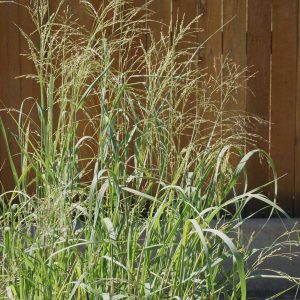
The Gamagrass (Tripsacum dactyloides) is a grass, perennial, perennial.

This high grass and robust, has long been recognized as a grass forage very productive. Its rate of photosynthesis (C4) from the most high. This is reported in the scientific literature for all species and a protein is also very high.

Natural populations have been found in most of the eastern half of the United States. It can also be productive in the arid regions to theaid ofirrigation. To date, limited research has been conducted on the resistance to thewinter Gamagrass. On the other hand, it is perfectly suited to the French climate.

icone Gamagrass

Theimplementation & management

The seed can be sown with a drill in rows or in a planter monograines. The seed is the size, the shape and the color of the seed of millet. On the other hand, it is enclosed in a capsule lasts in the shape of a cylinder, of a green color to the beige and the size ofa small seed of corn.

A handling and preparation careful when planting are important for a successful establishment.

The grass usually need several years toestablish. May be because the Gamagrass is a relative of the corn, it presents similar characteristics. Gamagrass reacts to levels offertilizer higher than most other perennial grasses,. It also has the ability toemerge ofa soil depth comparable to that of maize. Seedlings 2 to 4 cm of depth.

Productivity

Applications:

You want to solve your problems of pasture productivity ? Gamagrass may be the solution you are looking for. 

Its adaptability to a wide range of climates and soils (in the tray at the bottom, sandy to clayey), earned him a place in your operation.

Thehuge potential for regrowth of the gamagrass and the constant high quality of the forage are the key to unlocking your profit of pasture.

/!\ ATTENTION to the overgrazing : the peopling of the pasture’s natural Gamagrass has been largely eliminated because the animals prefer it to other grasses.

Indoor plants provide a good coverage of nesting on the ground, as well for pheasants and quail. 

can also be used in the bands filter. The field margins, buffer strips, contour, and buffers forest riparian absorb thenitrogen, phosphorus and control in part theerosion.

Versatility of the Gamagrass

In the association of several grasses you optimize and maximize your production of quality fodder. But be careful to compose your mixture and the amount of each species to not put them in competition when they need to produce.

To maintain a productive stand, it is essential to leave 15 to 20 centimetres of refusal. It is not necessary to make hay or graze on plants too raz. A large part of the reserves of plant is stored in the base of the plant. This allows a restart in vegetation fast for grazing and the cuts in the future.

Given its large appetite, it is often easier to manage in pure stands in the context ofa system of rotational grazing. The hay meadows allows you a total control.

Trials are being put in place in the Vosges, in Britain and in the Haute-Garonne. If you are interested to give it a try, do you know by e-mail or by phone.

The Benefits

The strengths of the Gamagrass : 15% protein,

another unique feature of the Gamagrass is its ability to green up earlier in the spring. It presents a seedling growth more rapid in the first year than other perennial grasses. This plant C4, such as corn or sorghum, has its peak production of fodder in the middle of summer. It takes the relay on the other grasses, which dramatically reduce their production in the summer period.

Graphique production Gamagrass

The Gamagrass is nutritious and easily consumed by all classes of livestock. The yields of fodder potential high and theappetite that combine to make a grass top for haying or grazing.

The tests revealed the following results : in the stands with enoughwater andfertilizer, the yield of three cuts (45 days ofinterval : 1 June 15 and July 1 September) generally varied from 17 to 19 tonnes per hectare of forage to 11 % to 15  per cent of proteins containing 65 % of TDN on a base anhydrous.

Fertilization

+ dNitrogen = + Performance

fertilization is an important factor in order to achieve your goals in the production of forage.

If you have a plantation established gamagrass, consider a split application offertilizer in order tomaximize your budget nutritious. Thenitrogen is a key factor to obtain better yields and fodder. The amount ofnitrogen to be applied depends on theadequacy ofother growth factors, such as thehumidity, thesun, the warm temperatures, etc

A notable difference between the gamagrass and many other grasses C4 lies in its ability to effectively use thenitrogen. This translates to higher forage yields. For example, dother prairie grasses nnot fully utilize the units ofnitrogen beyond doses ofapplication modest. The gamagrass has the potential to effectively transform thenitrogen in kilograms of forage additional. If you grow corn in your region, rates that guarantee a good return on investment  for the corn can serve as a reference for the gamagrass.

If you are in the year ofestablishment of the gamagrass, a higher rate ofnitrogen from 40 to 50 units per hectare is usually sufficient.

Records culture